Two Minutes For Holding
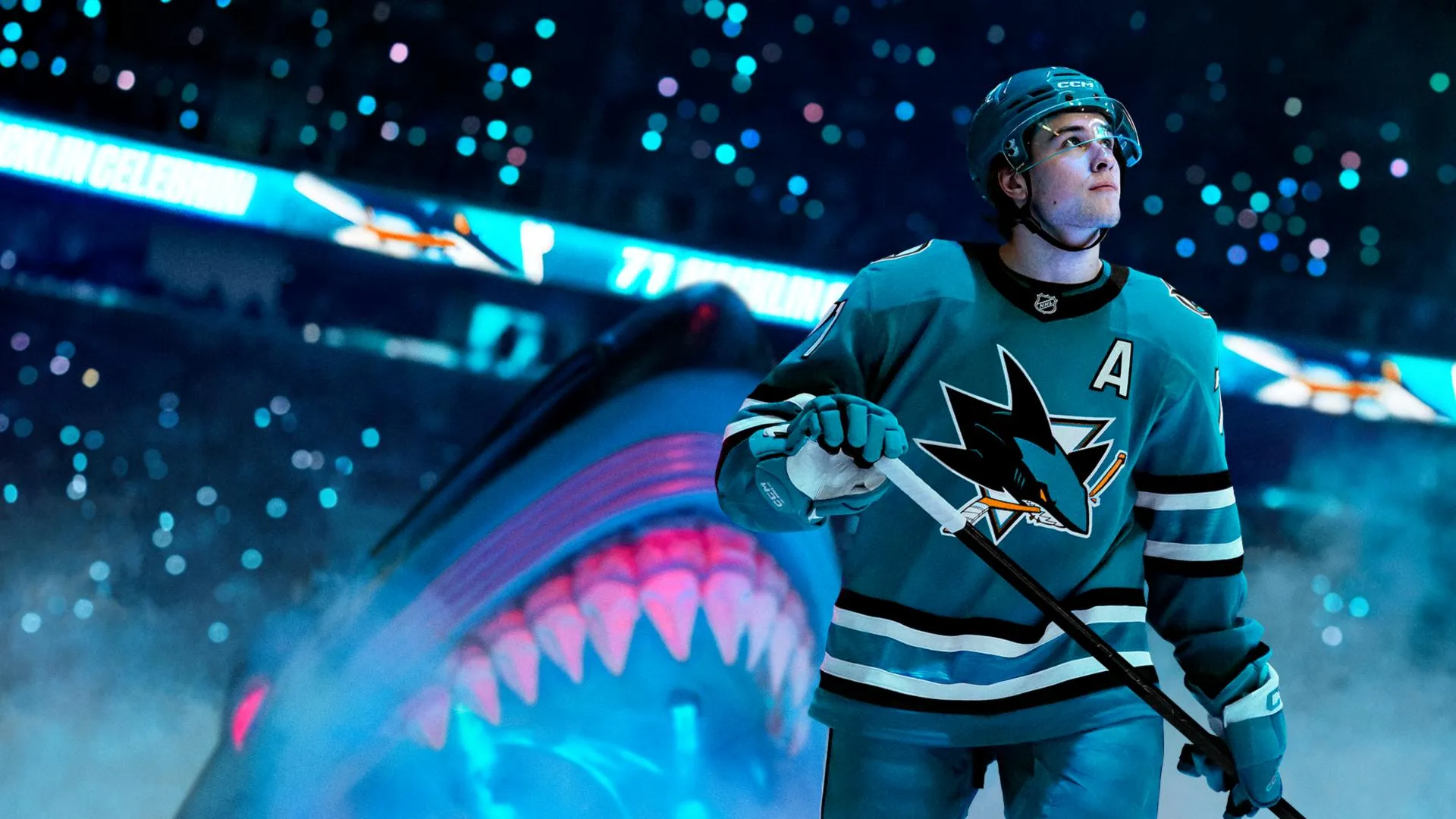
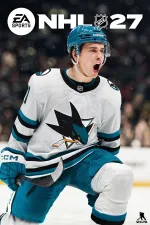
Despite its dedication to authenticity, NHL 27 has an identity crisis. The annual hockey sim from EA Vancouver spent the 2010s cementing itself as a persistent fan favorite, with NHL 11, NHL 14, and NHL 19 intertwining modes and customization options with ambitious intervals of innovation and approachability. This year’s iteration tries to imitate that era with a rising cover star in Macklin Celebrini, a modernized revision of GM Connected, and all-new broadcast packages built with hockey tourism in mind, but the serotonin thins into a sobering one-tee of familiarity.
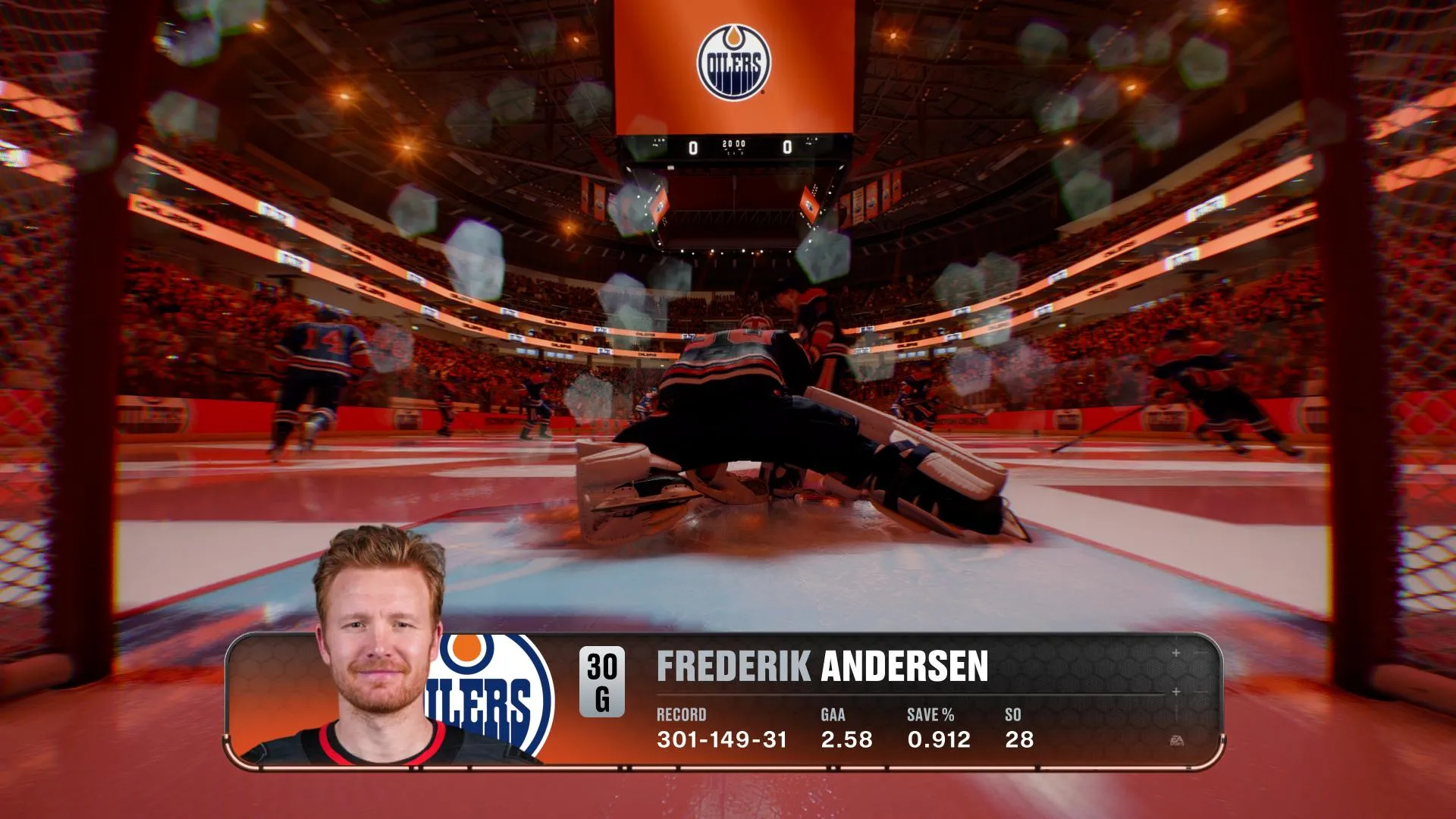
On the ice, NHL 27’s skating is where it should be. Whereas NHL 26 introduced a 2.0 version of 25’s Ice-Q technology that uses NHL Edge data to inform player attributes like top speed, shot power, and positioning to provide a realistic contrast between the league’s best, the latest entry refines it through motion. Passing is more intuitive with dump angles and cycling countering better board pins, poke checks, stick lifts, and defensive awareness. Goaltenders now have excellent reaction times across the board, but their crease awareness remains nonexistent.
More aggro netminders challenge breakaways and two-on-one scenarios while elite starters are dialed in on setups and one-timers that would normally leave them beached between the posts. Hitting isn’t as reckless as in years past, and due to smarter AI adjustments, the pacing in online and offline modes is a lot more fluid in the neutral zone, promoting user creativity that extends beyond left-trigger glitches, which have been nerfed. It adds realism and, as a result, makes X-Factor abilities that boost mobility and saucer passes more essential than enforcer metas.
New team-specific playbooks add to NHL 27’s renewed focus on cohesive AI behaviors as they use real-world positional data to determine how teams react to tactical strategies and pressure, but the idea falls short in execution. Instead of sharing three different presets, every team uses a unique tactical identity, replicating possession-heavy zone entries, defensive collapses that prioritize physical box-outs to protect the slot, and forechecking speed that’s amped to produce chaos in front of the net. It’s a great addition, but in theory, it’s barely recognizable on the ice as CPU teammates rarely pinch or stay in a specific formation after a faceoff is won.
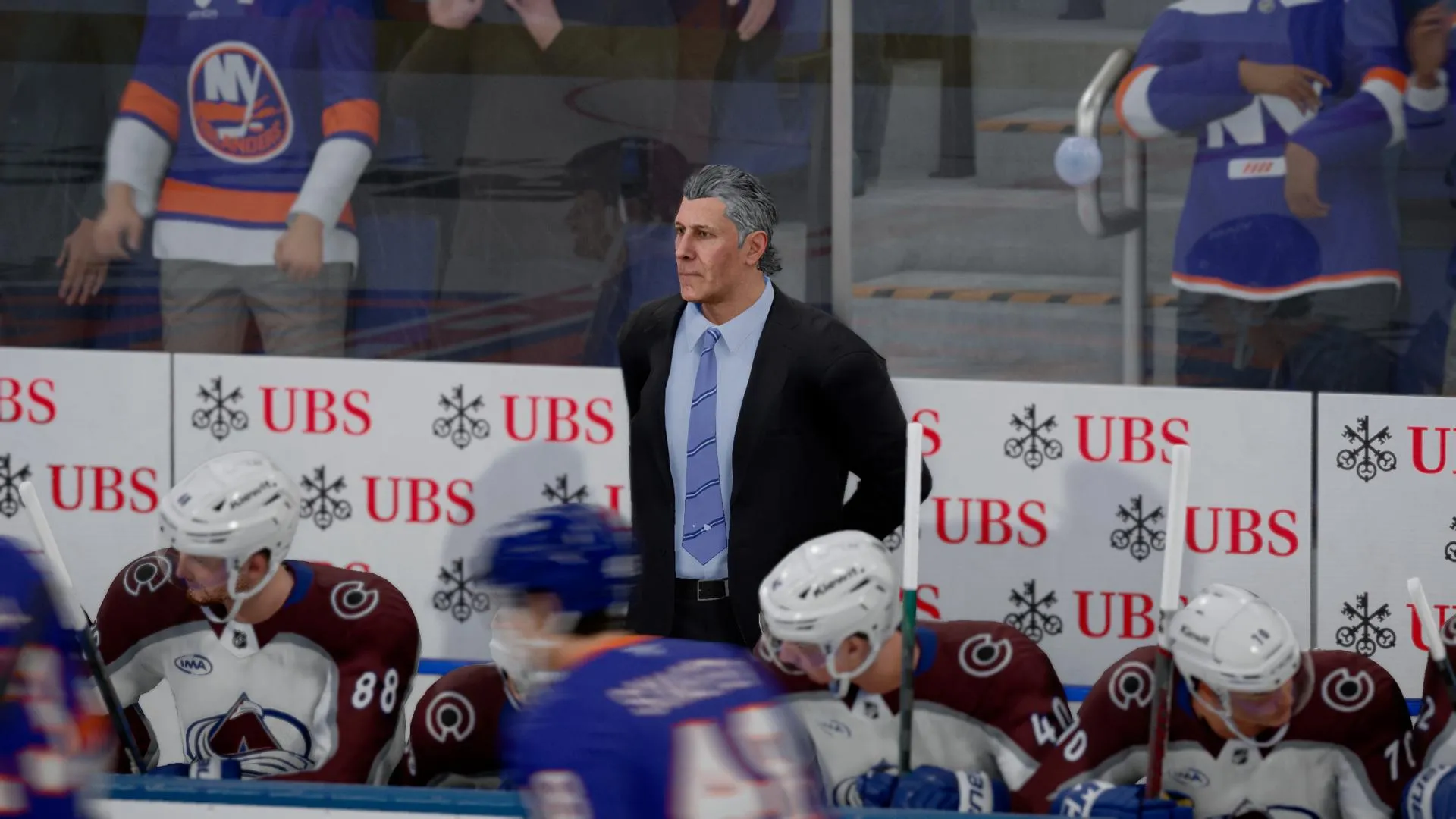
Playbooks also stick to unique team strategies that can’t be edited in online competitive modes, which goes against the philosophy of “playing your way.” Being able to control breakout styles and mix and match contextual shifts with rivals offers personalization, but it also takes it away by limiting whether a line cycles or shoots. As a result, defensive-minded teams like the New York Islanders and Detroit Red Wings are boring compared to the feral playstyles of the Carolina Hurricanes and Philadelphia Flyers that integrate pressure to level contenders into submission.
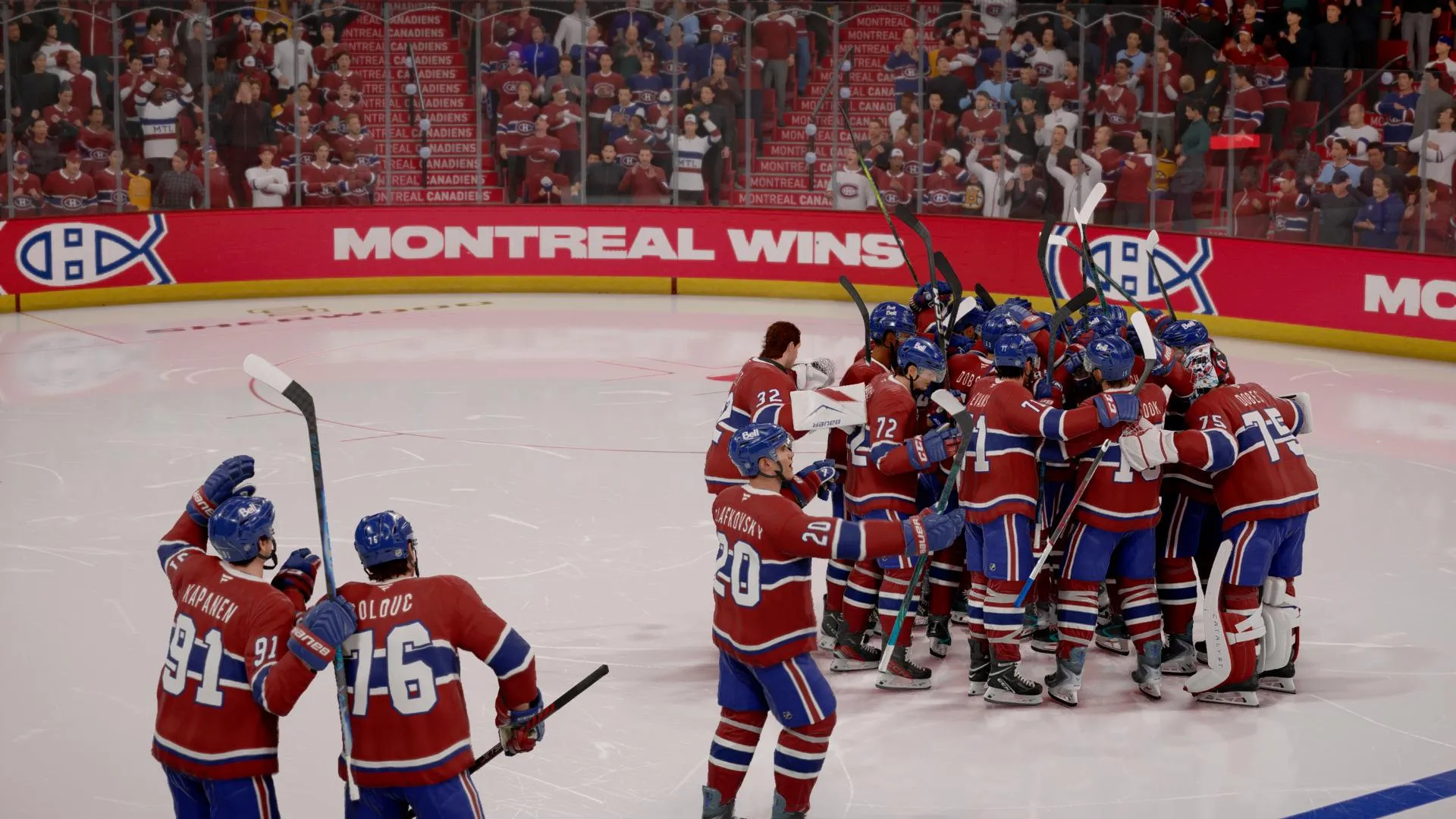
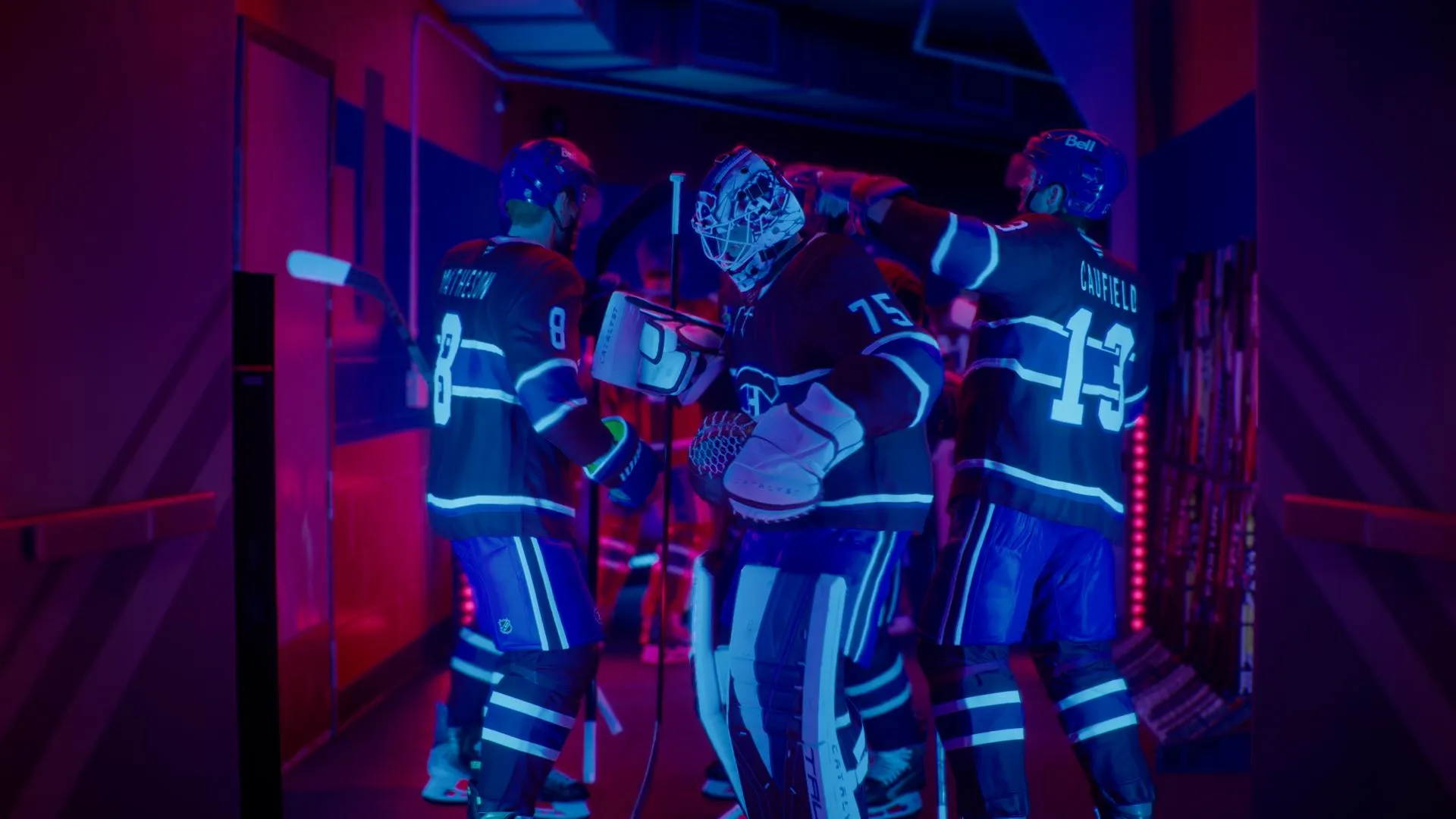
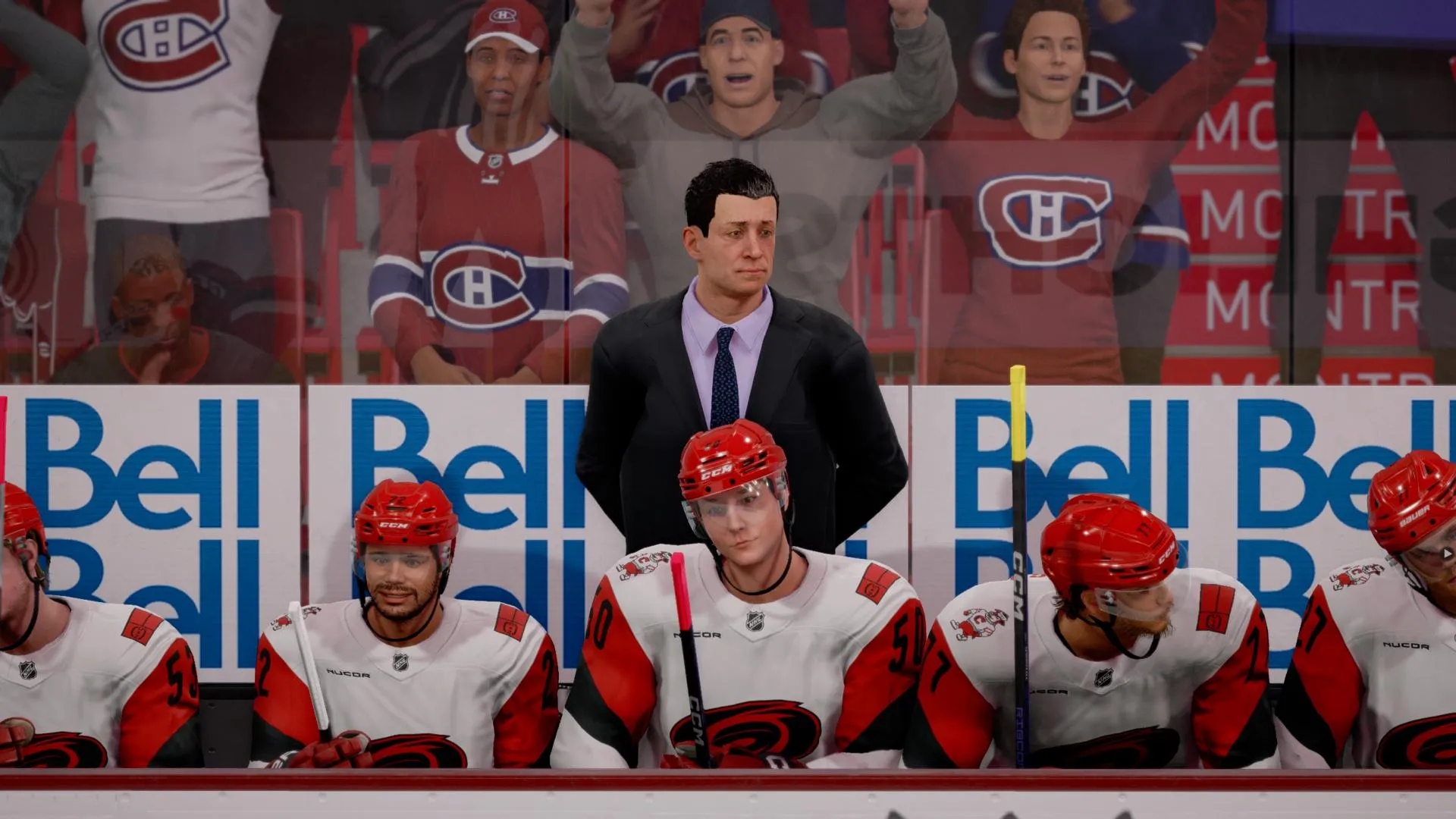
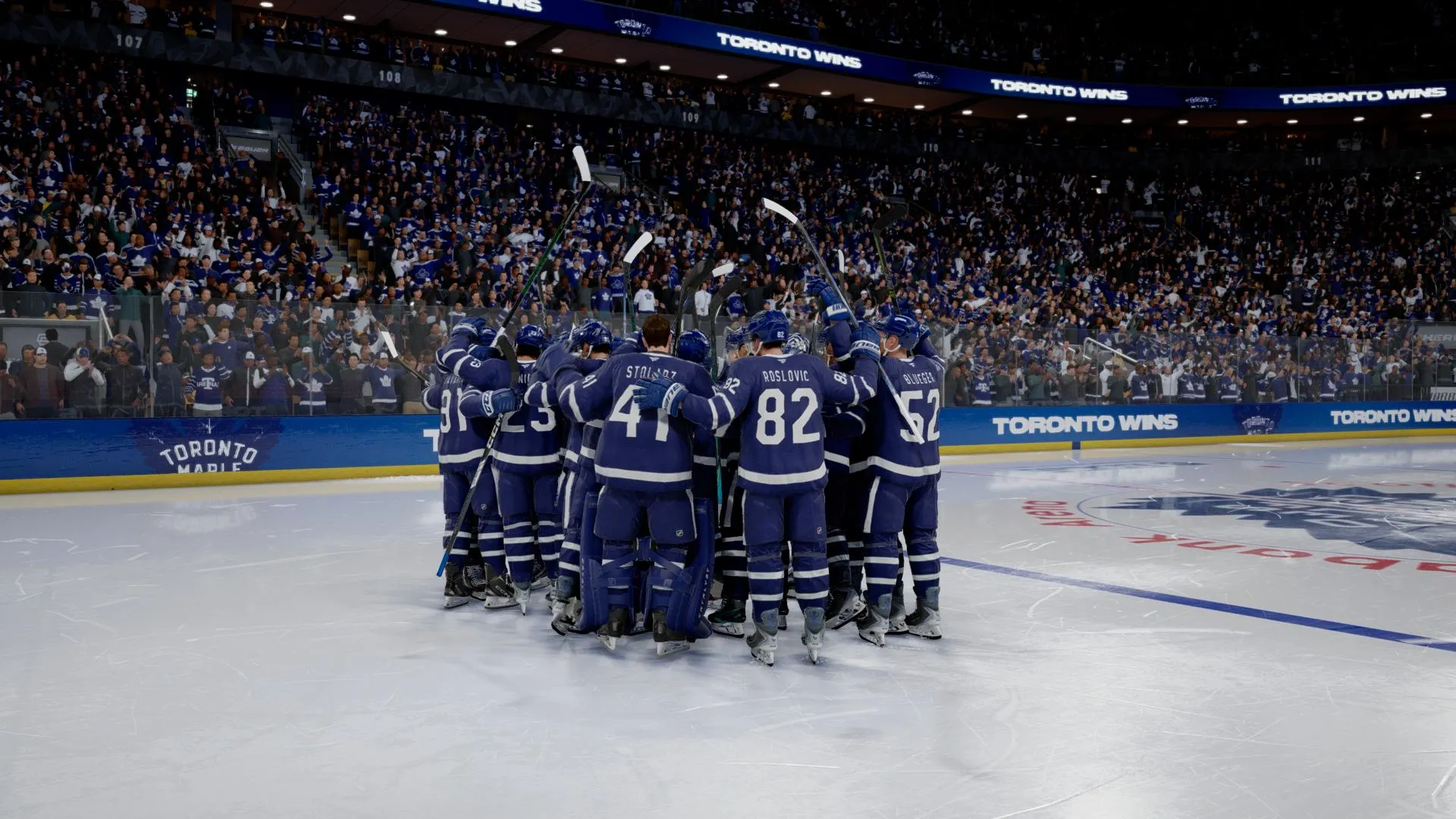
Team dynamics are also accentuated by new team atmospheres, with all 32 NHL arenas being reconstructed through distinct lighting systems, real-world jumbotron videos, and licensed goal songs that have replaced the series’ punk-leaning soundtracks. It’s a plus for Franchise lifers and anyone who has taken in Montreal’s Bell Centre or Nashville’s Bridgestone Arena up close, but it is another area that falls short of greatness; Team introductions are identical and fail to show tunnel walks, locker rooms, or Flyers mascot Gritty staring into someone’s soul. ESPN’s John Buccigross and TNT’s Darren Pang replace James Cybulski and Cheryl Pounder in the booth. While their quips are new, the commentary library is expanded using generative AI. Unfortunately, the results are noticeable, with frequent sequences that use dated vernacular and terrible name pronunciations. It’s understandable that sports game commentary banks are built out over the course of several releases, but the AI-generated voice lines do a grave injustice to the new play-by-play talent.
The popular GM Connected, which made its debut in NHL 14, makes its return in the form of Connected Franchise – a socially driven hybrid that allows players to create a league with up to 32 user-controlled teams. It’s designed to establish its own “hockey world” with customizable rosters and flexible salaries but lacks offseason development and the means for smaller friend circles to play games versus the CPU, rather than engage in a full 82-game season that reels off the same three squads until one resigns out of boredom. Be A Pro returns with the spotlight on team captaincy, and while Hockey Ultimate Team (HUT) expands on last year’s intro to Ranked and line combinations, World Of CHEL is an ostracized idea that still recycles user inventories.
It’s evident NHL 27 is a leap year for the franchise as it doesn’t innovate on the modes and immersion already present. Instead, it soft-launches patches that barely pass as a winter update. At its core, it’s a sequel that vicariously lives through fundamentals that have never felt better, despite the inaccurate face scans, generic creation systems, and how skaters of all ratings still prefer to receive passes on their backhand. It needs new ideas and a full day’s worth of polish just to offer something other than vibes when Hall & Oates cue up after a game-winning snipe.